Home
email
Understanding the Calcium- Phosphorus Ratio
An Introduction to Equine Microflora and Probiotics
Alfalfa for Distance Horses
The Pride Project - How To Speak CBC in One Easy Lesson
How to Condition Score Horses
A formula for energy expenditure
1995-96 Tevis Weight and Body Condition Score study
The Influence of Body Measurements and Condition Score on Performance Results during the 1998 Tevis Cup
Exertional rhabdomyolysis (Tying up)
Rice Bran and the Performance Horse
The Myths and Reality of Beet Pulp
Beet Pulp Safety Warning (aka the famous squirrel story)
Beating the Metabolic Pull
Part 1 - Hydration
Part 2 - Gut Motility
Part 3 - Energy balance
For AVS 303 Students - Class Lecture Notes for Applied Animal Feeding
                            

THE INFLUENCE OF BODY MEASUREMENTS AND CONDITION SCORE ON PERFORMANCE RESULTS DURING THE 1998 TEVIS CUP

Note: This is the second study, which was a follow-up to the 1995-96 Tevis projects. The purpose of this study was to validate (in other words, see if our conclusions still worked) previous results and also to test new hypotheses regarding the effect of weight on endurance performance. This study is being published in the 1999 Proceedings of the Equine Nutrition and Physiology Society.

S.E. Garlinghouse, R.E. Bray, E.A. Cogger and S.J. Wickler
Equine Research Center, California State Polytechnic University, Pomona CA 91768

Summary

Body measurements and performance results were collected from 193 equids participating in the 1998 Western States Trail Ride's 100-mile endurance race, commonly known as the Tevis Cup. Age of equids (horses, mules and ponies) were 5 to 21 years and body condition scores (CS) (NRC, 1989) ranged from 2.5 to 5.5. Equids were assessed for CS 11 to 18 hours prior to the race. Rider weight and tack (RW) were weighed using a digital scale. Body weights of horses (BW) were estimated from heart girth circumference, body length and condition score data. Cannon bone circumference (CBC) was measured midway between carpal-metacarpal and metacarpal-phalangeal joints. Miles completed, times and finishing place of horses that completed the race, miles completed by horses that did not complete the race, and horses that were disqualified (identified as lame, metabolic failure, rider option or overtime) were procured from official records compiled by race management. Total ride weight (TRW) consisted of BW plus RW. BW, RW, TRW and CBC did not differ between equids that completed or did not complete the race (P>.05). The rider's weight as a proportion of the horse's body weight (RW/BW) for animals disqualified for metabolic failure was higher than those that completed the race. Animals that completed the Tevis Cup had a significantly higher CS than those equids that were disqualified for metabolic failure (4.5 vs <3.5)(P<.01). However, there was no difference between the CS of those disqualified for other reasons, including lameness.

Key words: endurance, weight, condition score, horse

Introduction

Endurance riding is becoming an increasingly popular and competitive equestrian sport since its inception in the 1950's. Unlike the majority of equestrian events competing at the international level, endurance competitors are primarily amateurs. As such, riders tend to encompass a wide range of ages, athletic skill and sizes. Based on traditionally held beliefs from race track practices, the weight of the rider is considered a factor in performance. To allow for the assumed additional handicap placed on the horse by a larger rider, the governing body of the sport (the American Endurance Ride Conference) has established weight divisions based upon the total mass of the rider plus tack. Points which lead to regional and national awards are earned during a competition based partly on these weight divisions, so that riders compete against each other within their division, as well as against all other riders as a whole.

Despite the attention and emphasis placed upon rider weight, studies investigating the specific effects of weight and other body measurements upon endurance performance are extremely limited. Previous work by Lawrence and coworkers (1992) observed no effect of condition score in an elite population of horses during a 160-km endurance race, but observed that the more successful and competitive horses were those that were able to cover the course while losing the least amount of body weight. Previous work by Garlinghouse and Burrill (1999) observed that while rider weight, and rider weight relative to the body weight of the horse had no effect on performance during 160-km endurance races, condition score had a significant effect on completion rate. The study also observed that body weight of the horse had an effect on performance, in that as weight increased, so did incidence of failure due to lameness. The purpose of this study was to further validate and add to previous knowledge (Garlinghouse and Burrill) regarding the effects of several body measurements on endurance performance.

Materials and Methods

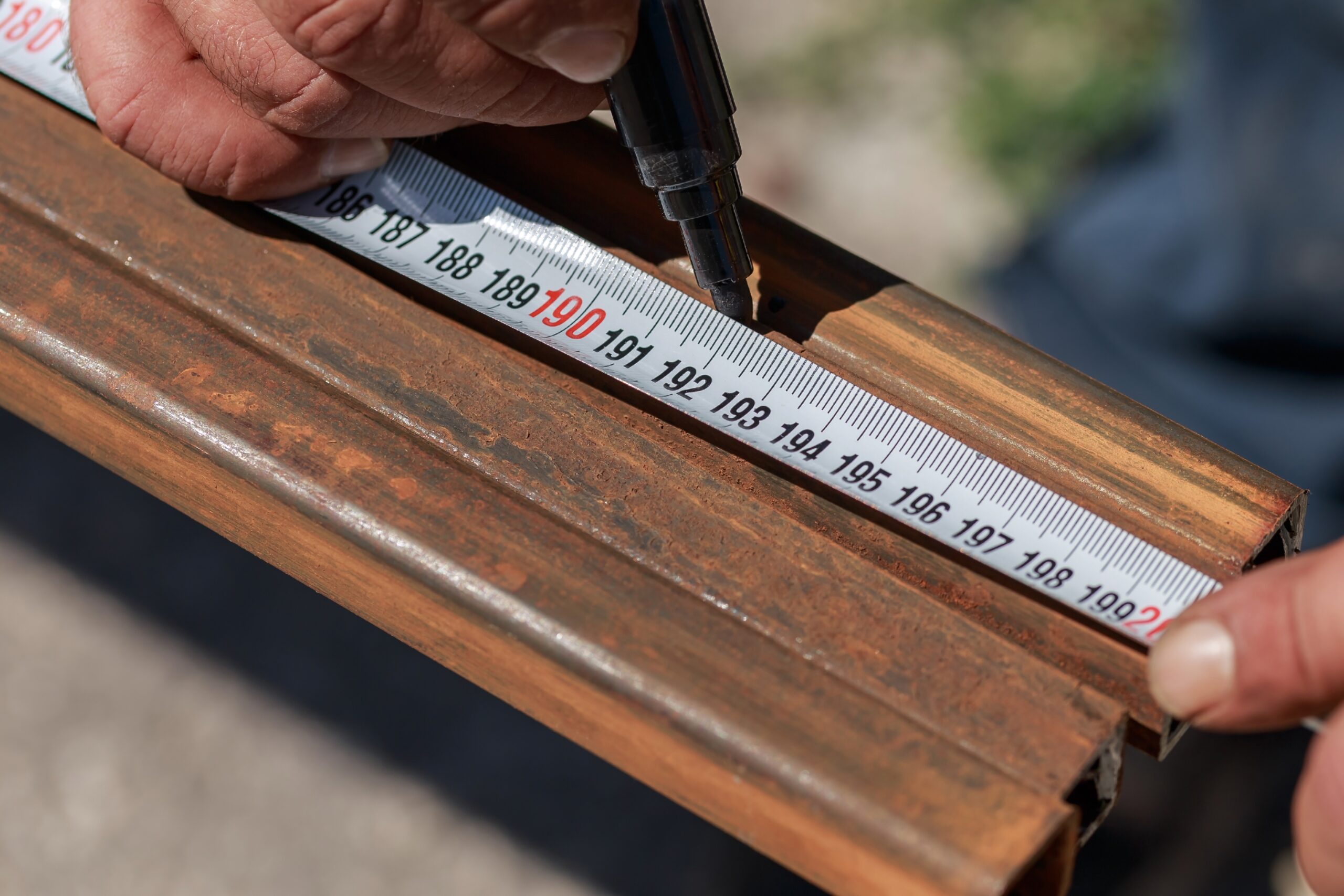
One hundred ninety three equids (190 horses, 3 mules) participated in this study. Data were collected at the pre-veterinary check of the 1998 Western States Trail Ride, an annual 160-km endurance event held in the Sierra Nevada Mountain Range and commonly referred to as the "Tevis Cup". Approximately 11 to 18 hours prior to the start of the event, a veterinary committee examined each entrant for normal gait and metabolic indicators, the results of which were recorded on a card and utilized at each of the eleven additional checkpoints. Horses which failed to meet veterinary criteria at any of the respective checks were disqualified based on four categories; Lame, Metabolic (experiencing stress related to exhausted horse syndrome, such as dehydration, tying-up, poor gut motility or synchronous diaphragmatic flutter), Rider Option or Overtime (failing to reach checkpoints within a given time allowance). Body measurements of the horses without tack were collected at the same time as the initial pre-event veterinary examination. Heart girth was measured four inches posterior to the elbow immediately following expiration. Body length was measured from the point of the shoulder to the point of buttock (tuber ischii). Cannon bone circumference was measured midway between carpal-metacarpal and metacarpal-phalangeal joints and included bone, skin and other associated tissues. Rider weight included the weight of tack and was collected by race management utilizing a digital scale.

An overall condition score was assigned after manual and visual appraisal of the six areas of the body described by Henneke (1985). Specifically, the neck area, withers, behind the elbow and shoulder, the ribs, tail head and along the topline are evaluated and individual scores from each area are averaged to obtain an overall condition score. Condition scores appraisals were conducted by the same evaluator.

Performance data were compiled by race management throughout the event, and included time to reach each checkpoint, overall placing, and results of veterinary examination. Reasons for disqualification were recorded for those horses not meeting veterinary criteria, or otherwise unable to continue.

Body weights were calculated from previous formulae (Milner and Hewitt 1969; Hall 1971; Ensminger 1977; Leighton-Hardman 1980) utilizing heart girth and body length measurements; (kg) = girth2 x length/Y; where girth in cm is measured immediately posterior to the elbow following expiration, and length is measured from the point of the shoulder to the point of the buttock (tuber ischii). The values used for Y were as reported by Carroll and Huntington (1988), in which horses with condition scores less than 3 (on the Carroll scale) had a higher average value for Y than did horses with condition scores of 3 or above (12265 and 11706 cm3/kg, respectively). Horses with a condition score of 3 on the Carroll scale correlate by description to a condition score of 5 on the Henneke scale utilized for this study. Therefore, in estimating the weights of horses, a Y value of 12265 cm3/kg was utilized for horses with condition scores of 4.5 or below; and a Y value of 11706 cm3/kg was utilized for horses with condition scores of 5 or above.

Weight was analyzed four ways; 1) rider weight (RW) independent of weight of the horse; 2) Body weight (BW) independent of the weight of the rider; 3) Total ride weight (TRW) was the sum of RW plus BW; 4) rider weight relative to the weight of the horse (RW/BW). A Student's t-test was used for mean comparisons. Spearman's coefficient of ranked correlations was utilized to analyze effect on overall placing. Regression analysis was used to evaluate the effect of condition scores on average miles completed. A p<0.05 was considered significant.

Results and Discussion

Condition Score
Condition score had a significant effect on performance. Animals that completed the race had higher condition scores (mean value 4.5±.5) than animals disqualified for metabolic failure (<3.5)(p<0.0001). Condition score did not have an effect on disqualification due to other reasons, including lameness. Table 1 illustrates completion rate and average miles completed as a function of condition score.
CS N Completion Rate (%)Average Miles CompletedAverage km Completed
2.5 4 0.0 40.9 65.4
3.0 15 0.0 46.7 74.7
3.5 23 26.1 62.3 99.7
4.0 37 94.6 97.8 156.5
4.5 33 87.9 95.1 152.2
5.0 31 93.6 98.9 158.2
5.5 8 100.0 100.0 160.0

These results agree with previously reported data (Garlinghouse and Burrill), in that no horses completed with CS less than 3.5. Horses with CS 4.0 had higher completion rates, with the highest completion rates observed in horses with CS approximating 5 - 5.5.

Weight

Table 2 shows mean values of RW, BW, RW/BW and TRW among horses successfully completing the course (Group S); those disqualified for metabolic failure; and those who were lame.

Table 2. Weight carried during 160-km endurance ride
Group S Metabolic Lame
Range Mean Range Mean Range Mean
Body weight (kg) 347.0-551.0 438.2 ± 39.1 370.2-520.9 413.5 ± 27.9 360.1-469.5 454.5 ± 41.2
Rider weight (kg) 59.2-106.7 81.0 ± 11.1 56.4-105.4 82.5 ± 11.5 67.0-118.6 85.1 ± 14.4
Rider weight ratio 121-.24 .186 ± .03 .140-.267 .20 ± .026 .157-.313 .189 ± .032
Cannon circumference (cm) 17.1- 21.3 19.25±.73 17.8-20.6 19.1±.69 17.6-20.9 19.13±.71

Group S is defined as those who successfully completed the course within the allotted time allowances.

Rider weight independent of the animal BW had no effect on completion rate, or on overall placing. Among disqualified horses, rider weight had no effect on miles completed prior to elimination. This is in contrast to traditionally held beliefs, but agrees with previously published data collected at this same event (Garlinghouse and Burrill). Although work by Pagan and Hintz (1986) demonstrated that energy requirements increase with weight load, the relatively low intensity of sustained exercise during endurance competition may mitigate the substrate depletion and lactate accumulation observed in high intensity exercise. The results of this study would suggest that horses in good condition are capable of carrying relatively heavy loads, whether as rider weight or in their own body weight, over a 160-km course without the deleterious physiological effects seen in maximal exercise.

Body weight of the horse had an effect in that as body weight increased, failure due to lameness increased. Mean cannon bone circumference measurements of 19.25±.71 cm were similar to values of 18.83±.66 cm reported in Garlinghouse and Burrill. Circumference did not increase proportionately as body mass increased. These results suggest that increased body weight without a proportionate increase in the cross sectional area of the metacarpus increase the incidence of exercise-induced trauma and biomechanical failure.

The RW/BW for animals disqualified for metabolic failure was higher than those that completed the race. This would appear to support traditionally held beliefs that horses cannot successfully carry rider weights in excess of a given percentage of the horse BW, yet this is not supported by RW or BW results. There was also no effect of RW/BW on overall placing. Therefore, it would appear that the effect of RW/BW on metabolic failure is a function of decreasing CS in some animals, rather than an inability to carry heavier weights relative to BW.

Conclusions

The results of this study confirm that rider weight, either independent of, or relative to the animal BW is not a critical factor in predicting performance during a 160-km endurance competition. BW was also not a factor in horses disqualified for metabolic failure, but did have an effect on lameness. CBC did not have a direct effect on performance, but the relatively narrow range of measurements obtained may be a contributing factor to lameness as BW increased. Condition score has a strong effect on completion rate. However, it should be noted that the Tevis Cup is a technically challenging event over unique terrain. Further investigation at endurance competitions held under differing conditions and terrain is merited.

Literature Cited

Carroll, C.L., Huntington, P.J. (1988). Body condition scoring and weight estimation. Equine vet. J. 20 (1): 41-45.
Garlinghouse, S.E., Burrill, M.J. (1999) Relationship of body condition scores on completion rates during 160-km endurance races. In Jeffcott LB (ed) Equine Exercise Physiology 5, ICEEP Publications 1999. In press.
Henneke, D.R. (1985). A condition score system for horses. Equine Practice 7 (8):13-15.
Lawrence, L.M., Jackson, S., Kline, K., et al (1992). Observations on body weight and condition of horses in a 150-mile endurance ride. J. Equine Vet. Sci. 12:320-324.
Pagan, J.D., Hintz, H.F. (1986). Equine energetics: Relationship between body weight and energy requirements in horses. J. Anim. Sci. 63:815-821.

Copyright Susan Garlinghouse, 1999